


GABA Oolong — Amber Drift AD-101 (Spring 2026)
GABA Oolong — Amber Drift AD-101 (Spring 2026)
27 in stock
The Tea
GABA Oolong — Amber Drift AD-101
Sanxing, Yilan · Jinxuan cultivar · GABA processed
Most GABA teas made in Taiwan follow a southern school: heavy fermentation, dark red liquor, a pronounced acidity. Hsieh takes a different approach. Before the anaerobic stage that converts glutamic acid to GABA, the leaf undergoes a preliminary light oxidation — the same wilting and moisture-release process used in traditional oolong production. Two distinct processes, run in sequence.
The difference shows in the cup. The liquor holds the clarity and golden register of an oolong rather than the deep red of a heavily fermented tea. The taste is clean and lightly sweet, without the sourness that defines the southern style. For drinkers who have encountered GABA tea and found it an acquired taste, this one tends to surprise them.
The cultivar is Jinxuan — known for its natural milky sweetness and approachable character. Only certified organic Jinxuan leaves are selected for GABA production. GABA content reaches 100 to 200mg per 100g. Caffeine is significantly reduced through the processing method, and the GABA itself is understood to modulate the stimulating effects that remain. The tea was developed with a wellness-oriented drinker in mind, and it carries that intention without announcing it.
What is GABA tea? It is a specialty oolong tea processed in an oxygen-free, nitrogen rich environment to boost levels of gamma-aminobutyric acid (GABA), a natural compound known for promoting relaxation and reducing stress.
The Region — Sanxing, Yilan
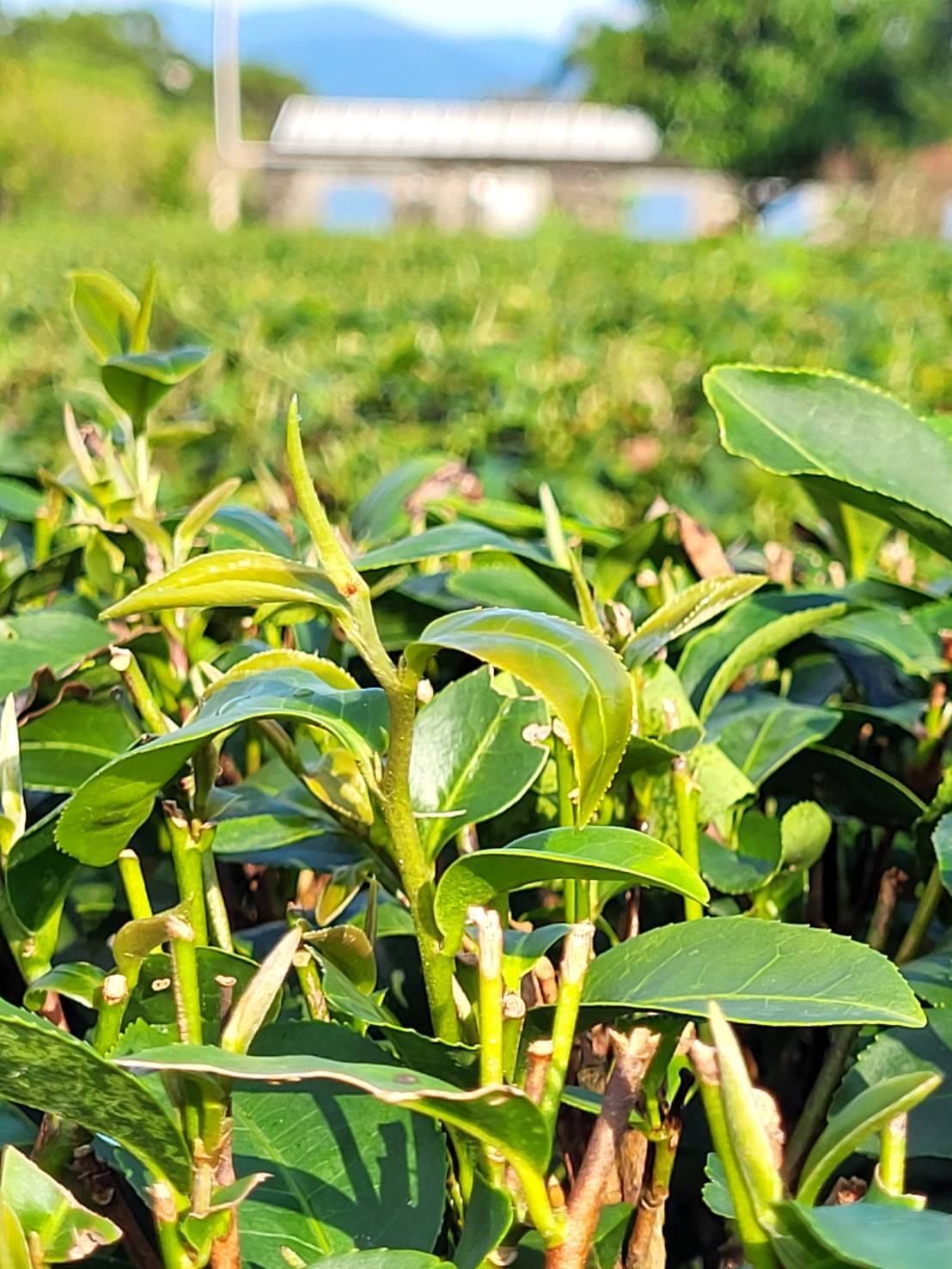
Sanxing sits in the Yilan basin on Taiwan's northeastern coast, sheltered by mountains that trap cloud cover and moisture year-round. The climate is cool and persistently humid — conditions that slow leaf growth and concentrate flavour. This is a different logic from the high-altitude tea regions of central Taiwan. Sanxing's character is not shaped by elevation alone but by the steady accumulation of mist, gentle temperature variation, and a growing environment that rewards patience. The result is tea with a particular softness and depth — rooted, rather than lifted.
The Garden — Hsieh’s Tea Garden
Hsieh has been making GABA oolong in Sanxing for over two decades — long enough to have been dismissed early and vindicated slowly. When Mr. Hsieh first brought his GABA tea to tea exhibitions, the response from the industry was skeptical. He exhibited there for fifteen consecutive years anyway, building a following through direct engagement and steady improvement. The market eventually caught up.
The farm's philosophy on GABA production is straightforward: only certified organic leaves go into it. Conventional tea from the same garden is sold through wholesale channels. The line is deliberate — GABA tea, in Mr. Hsieh's view, belongs in a different category, and the raw material should reflect that.
Tasting Notes: warm, earthy, subtle milkiness, slightly sweet
Drinking Recommendation: Hot, no milk or sweetener.
Product Note: 1 ounce of loose-leaf tea typically yields 5 to 8 cups of tea.
Couldn't load pickup availability
Share


Tea Information
Steeping Information
Steep for 3 minutes using 195ºF (90ºC) water.Start with 1 tsp of loose tea, then add 1 tsp per 8oz of water. For example, a 16oz teapot will use 3 tsp of tea.Oolong
Ingredients
Oolong tea.
Allergens
- None